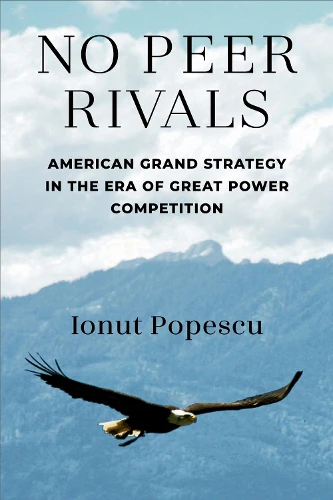
No Peer Rivals
American Grand Strategy in the Era of Great Power Competition A new realist grand strategy for the U.S. to maintain its sole superpower status With military maneuvers in Taiwan and the South China Sea and the eruption of war in Ukraine, the past few years have brought deteriorating diplomatic relations and increasing military and economic tensions between the United States, China, and Russia. After benefiting from the geopolitical and financial advantages conferred by a privileged status as a global superpower for three decades, the United States needs to adapt to a geopolitical shift toward competition and confrontation in order to contain China’s quest for global superpower status.
No Peer Rivals takes a major staple of International Relations scholarship—the offensive realist paradigm—and develops a comprehensive and practical grand strategy for the United States in this new era of Great Power Competition. The No Peer Rival framework is grounded in a realistic assessment of the most likely courses of action adopted by China, Russia, and other important regional powers. It prioritizes great power rivalry over other strategic goals, and identifies China as the biggest threat to America’s unique position in the international system. This grand strategic approach carefully aligns the domestic sources of national power (economic strength, energy security, and technological prowess) to America’s foreign policy and national security objectives. In addition to recommending necessary changes to America’s military and diplomatic strategies, No Peer Rivals also demonstrates that a realistic approach to industrial policy, international trade, energy production, and technological superiority offers the best chance for developing the sinews of power needed to outcompete Beijing in the long run.
Original: $50.37
-65%$50.37
$17.63Product Information
Product Information
Shipping & Returns
Shipping & Returns
Description
American Grand Strategy in the Era of Great Power Competition A new realist grand strategy for the U.S. to maintain its sole superpower status With military maneuvers in Taiwan and the South China Sea and the eruption of war in Ukraine, the past few years have brought deteriorating diplomatic relations and increasing military and economic tensions between the United States, China, and Russia. After benefiting from the geopolitical and financial advantages conferred by a privileged status as a global superpower for three decades, the United States needs to adapt to a geopolitical shift toward competition and confrontation in order to contain China’s quest for global superpower status.
No Peer Rivals takes a major staple of International Relations scholarship—the offensive realist paradigm—and develops a comprehensive and practical grand strategy for the United States in this new era of Great Power Competition. The No Peer Rival framework is grounded in a realistic assessment of the most likely courses of action adopted by China, Russia, and other important regional powers. It prioritizes great power rivalry over other strategic goals, and identifies China as the biggest threat to America’s unique position in the international system. This grand strategic approach carefully aligns the domestic sources of national power (economic strength, energy security, and technological prowess) to America’s foreign policy and national security objectives. In addition to recommending necessary changes to America’s military and diplomatic strategies, No Peer Rivals also demonstrates that a realistic approach to industrial policy, international trade, energy production, and technological superiority offers the best chance for developing the sinews of power needed to outcompete Beijing in the long run.