
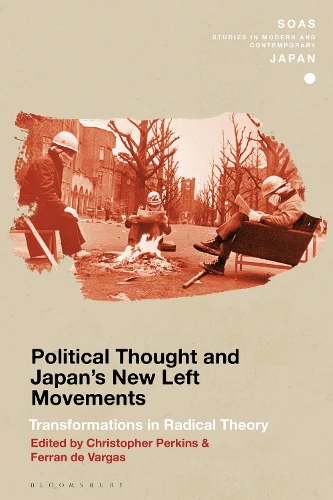
Political Thought and Japan's New Left Movements
Transformations in Radical Theory
A comprehensive exploration of the thinkers that shaped, and were shaped by, Japan’s New Left movement.
While the intellectual history of the New Left is dominated by scholarship on western thinkers, Japan's radical theorists developed equally groundbreaking ideas, producing one of the most intense periods of political thought in the global twentieth century. Political Thought and Japan's New Left Movements finally redresses this imbalance by assembling the first comprehensive collection of authoritative essays on the Japanese intellectuals who, by critically rethinking the Marxian legacy, defined their era. Highlighting the connections between these key figures, their historical circumstances and their biographies, this book provides concise, accessible overviews of the theoretical approaches that shaped and were shaped by Japan's 1960s New Left movements, while also evaluating the development and impact of these intellectual contributions. In doing so, it demonstrates the distinctiveness and significance of Japanese left-wing thought, providing an invaluable resource for students of twentieth-century radical politics.
Product Information
Product Information
Shipping & Returns
Shipping & Returns
Description
Transformations in Radical Theory
A comprehensive exploration of the thinkers that shaped, and were shaped by, Japan’s New Left movement.
While the intellectual history of the New Left is dominated by scholarship on western thinkers, Japan's radical theorists developed equally groundbreaking ideas, producing one of the most intense periods of political thought in the global twentieth century. Political Thought and Japan's New Left Movements finally redresses this imbalance by assembling the first comprehensive collection of authoritative essays on the Japanese intellectuals who, by critically rethinking the Marxian legacy, defined their era. Highlighting the connections between these key figures, their historical circumstances and their biographies, this book provides concise, accessible overviews of the theoretical approaches that shaped and were shaped by Japan's 1960s New Left movements, while also evaluating the development and impact of these intellectual contributions. In doing so, it demonstrates the distinctiveness and significance of Japanese left-wing thought, providing an invaluable resource for students of twentieth-century radical politics.