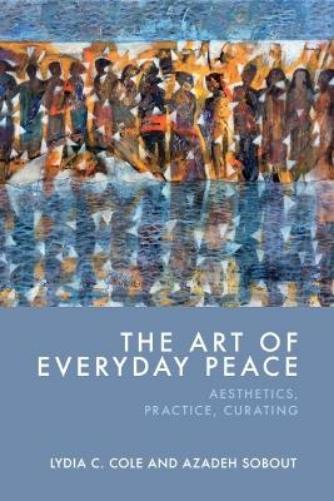
The Art of Everyday Peace
Aesthetics, Practice, Curating
Examines the role of the arts in everyday peace-making, peacebuilding and social transformation in conflict-affected contexts.
Conceptualising everyday peace as relations, the collection frames the arts as an integral part of how people and communities respond to war, conflict and violence from the everyday. In doing so, the collection introduces three connected dynamics of arts connection to everyday peace: everyday aesthetics, everyday practice and everyday curating.Building on this, chapters introduce original, empirically grounded case studies from a range of global contexts, each engaging with a different artform including photography, visual art, theatre and performance art, filmmaking, body mapping and exhibition making.The collection offers a timely contribution to arts-based approaches to peace and conflict studies. Engaging with critical, decolonial and feminist peacebuilding scholarship, it shows how the arts generate alternative ways of making, crafting and imagining peace, with relevance for scholars, practitioners and communities alike.
Product Information
Product Information
Shipping & Returns
Shipping & Returns
Description
Aesthetics, Practice, Curating
Examines the role of the arts in everyday peace-making, peacebuilding and social transformation in conflict-affected contexts.
Conceptualising everyday peace as relations, the collection frames the arts as an integral part of how people and communities respond to war, conflict and violence from the everyday. In doing so, the collection introduces three connected dynamics of arts connection to everyday peace: everyday aesthetics, everyday practice and everyday curating.Building on this, chapters introduce original, empirically grounded case studies from a range of global contexts, each engaging with a different artform including photography, visual art, theatre and performance art, filmmaking, body mapping and exhibition making.The collection offers a timely contribution to arts-based approaches to peace and conflict studies. Engaging with critical, decolonial and feminist peacebuilding scholarship, it shows how the arts generate alternative ways of making, crafting and imagining peace, with relevance for scholars, practitioners and communities alike.