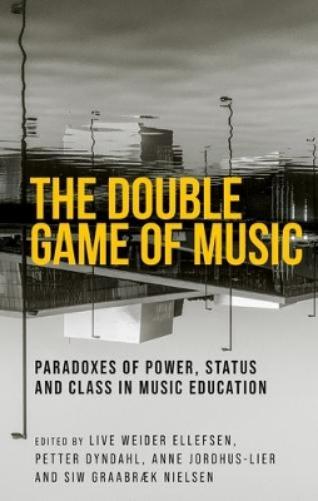
The Double Game of Music
Paradoxes of Power, Status and Class in Music Education The double game of music imagines music education as a series of games – each with its own rules, play currency and players – to challenge readers to rethink the significance of music and musical upbringing in shaping social structures.
The book uses the metaphor of ‘double games’ to critically analyse how music education, as a series of games, is played. Examining the intertwinement of social power with players’ belief in the purity of their game, and of material with symbolic economies, the authors unravel the complex social dynamics of musical upbringing and socialisation.
Drawing on their own empirical research and a wide range of international contributions, the authors unravel the intertwining of social positioning and power hierarchies with players beliefs in the pure values and virtues of their games, whether these relate to parenting, children’s play, schooling, academic pursuits, musical leisure activities or the television and music industries.
In a world where music is often celebrated as an important tool for inclusion and democratisation, this groundbreaking book offers a timely critique, revealing complexities and contradictions that tend to be overlooked by teachers, researchers, politicians and others interested in the powers of music education.
Original: $57.18
-65%$57.18
$20.01Product Information
Product Information
Shipping & Returns
Shipping & Returns
Description
Paradoxes of Power, Status and Class in Music Education The double game of music imagines music education as a series of games – each with its own rules, play currency and players – to challenge readers to rethink the significance of music and musical upbringing in shaping social structures.
The book uses the metaphor of ‘double games’ to critically analyse how music education, as a series of games, is played. Examining the intertwinement of social power with players’ belief in the purity of their game, and of material with symbolic economies, the authors unravel the complex social dynamics of musical upbringing and socialisation.
Drawing on their own empirical research and a wide range of international contributions, the authors unravel the intertwining of social positioning and power hierarchies with players beliefs in the pure values and virtues of their games, whether these relate to parenting, children’s play, schooling, academic pursuits, musical leisure activities or the television and music industries.
In a world where music is often celebrated as an important tool for inclusion and democratisation, this groundbreaking book offers a timely critique, revealing complexities and contradictions that tend to be overlooked by teachers, researchers, politicians and others interested in the powers of music education.