
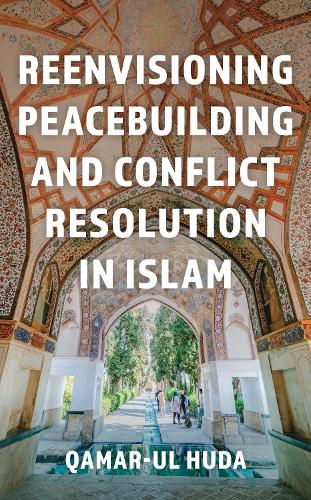
Reenvisioning Peacebuilding and Conflict Resolution in Islam
Qamar-ul Huda investigates the application of conflict resolution and peacebuilding in Muslim-majority communities. The book focuses on methods and practices by Muslim practitioners and shows how a faith-based commitment retains the capacity to empower effective social, political, and intellectual action that results in meaningful change. Reenvisioning Peacebuilding and Conflict Resolution in Islam examines the variety of strategic peacebuilding and conflict resolution activities conducted by Muslim practitioners and nongovernmental organizations in Muslim-majority communities.
Qamar-ul Huda explores ways that Muslim scholars, civil society members, and communities interpret violence and nonviolence, peacebuilding, and conflict resolution in an interconnected globalized age, focusing on methods, practices, and strategies. He shows how a faith-based commitment can empower effective social, political, and intellectual action that results in meaningful change.
The book sheds light on a variety of vital topics, including how the state utilizes hard and soft power in global, religious diplomacy; ways in which civil society organizations and NGOs maximize networks to engage in peacebuilding and conflict resolution; the role of civil society in soft power politics; and how some peacebuilding organizations are out of step with local Muslim cultures & religious customs, and why that matters. Qamar-ul Huda charts a vision of contemporary ethics of peacebuilding, pluralism, reconciliation, and dialogue.
Product Information
Product Information
Shipping & Returns
Shipping & Returns
Description
Qamar-ul Huda investigates the application of conflict resolution and peacebuilding in Muslim-majority communities. The book focuses on methods and practices by Muslim practitioners and shows how a faith-based commitment retains the capacity to empower effective social, political, and intellectual action that results in meaningful change. Reenvisioning Peacebuilding and Conflict Resolution in Islam examines the variety of strategic peacebuilding and conflict resolution activities conducted by Muslim practitioners and nongovernmental organizations in Muslim-majority communities.
Qamar-ul Huda explores ways that Muslim scholars, civil society members, and communities interpret violence and nonviolence, peacebuilding, and conflict resolution in an interconnected globalized age, focusing on methods, practices, and strategies. He shows how a faith-based commitment can empower effective social, political, and intellectual action that results in meaningful change.
The book sheds light on a variety of vital topics, including how the state utilizes hard and soft power in global, religious diplomacy; ways in which civil society organizations and NGOs maximize networks to engage in peacebuilding and conflict resolution; the role of civil society in soft power politics; and how some peacebuilding organizations are out of step with local Muslim cultures & religious customs, and why that matters. Qamar-ul Huda charts a vision of contemporary ethics of peacebuilding, pluralism, reconciliation, and dialogue.