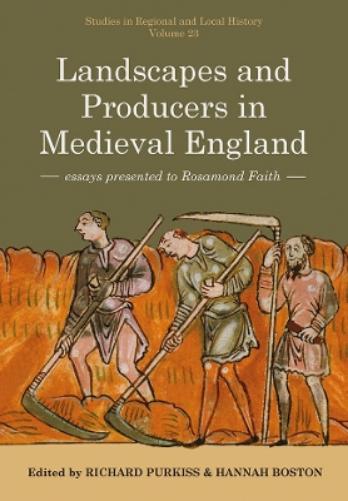
Landscapes and Producers in Medieval England
Essays presented to Rosamond Faith Dr Rosamond Faith is a leading historian of the Englishpeasantry in the early and central Middle Ages. In a series of influentialstudies, she has uncovered the basic structures of rural society, revealing howeconomic organisation, physical environment, and ideology shaped the lives ofordinary people in the earliest documented centuries. In this Festschrift, friends and colleagues takeup her theme, offering new perspectives on people who worked for a livingbetween the seventh and fourteenth centuries. King Alfred famously dividedsociety into three orders, but whereas the lives of ‘those who fight’ and ‘thosewho pray’ are recorded in their own words, the experience of ‘those who work’can only be recovered indirectly. The essays collected here approach ruralsociety under three different headings, each examining a different dimension ofpeasant life. The first section addresses the organisation of ruralsociety. Every locality was subject to instruments and processesregulating the exploitation of the landscape, whether administrative orco-operative in nature, and whether operating on a regional or manorial scale.A second group of essays considers how the rural population was classified, andhow this reflected or obscured realities on the ground. Administrativedocuments employed social categories which did not necessarily align witheveryday usage, while people whose livelihood was not wholly agricultural, ornot entirely encompassed by the manor, had a light documentary footprint.Further papers address the practicalities of agricultural production. Whilemuch was dictated by universal constraints, scientific and topographicalstudies shed light on adaptations in technology and cultivation systems.
RosamondFaith is a leading historian of English peasantry in the middle ages. Her workhas uncovered the basic structures of rural society, revealing how economicorganisation, physical environment, and ideology shaped the lives of ordinarypeople in this period. This Festschrift takes up her themeoffering new perspectives in this field.
Original: $47.65
-65%$47.65
$16.68Product Information
Product Information
Shipping & Returns
Shipping & Returns
Description
Essays presented to Rosamond Faith Dr Rosamond Faith is a leading historian of the Englishpeasantry in the early and central Middle Ages. In a series of influentialstudies, she has uncovered the basic structures of rural society, revealing howeconomic organisation, physical environment, and ideology shaped the lives ofordinary people in the earliest documented centuries. In this Festschrift, friends and colleagues takeup her theme, offering new perspectives on people who worked for a livingbetween the seventh and fourteenth centuries. King Alfred famously dividedsociety into three orders, but whereas the lives of ‘those who fight’ and ‘thosewho pray’ are recorded in their own words, the experience of ‘those who work’can only be recovered indirectly. The essays collected here approach ruralsociety under three different headings, each examining a different dimension ofpeasant life. The first section addresses the organisation of ruralsociety. Every locality was subject to instruments and processesregulating the exploitation of the landscape, whether administrative orco-operative in nature, and whether operating on a regional or manorial scale.A second group of essays considers how the rural population was classified, andhow this reflected or obscured realities on the ground. Administrativedocuments employed social categories which did not necessarily align witheveryday usage, while people whose livelihood was not wholly agricultural, ornot entirely encompassed by the manor, had a light documentary footprint.Further papers address the practicalities of agricultural production. Whilemuch was dictated by universal constraints, scientific and topographicalstudies shed light on adaptations in technology and cultivation systems.
RosamondFaith is a leading historian of English peasantry in the middle ages. Her workhas uncovered the basic structures of rural society, revealing how economicorganisation, physical environment, and ideology shaped the lives of ordinarypeople in this period. This Festschrift takes up her themeoffering new perspectives in this field.