
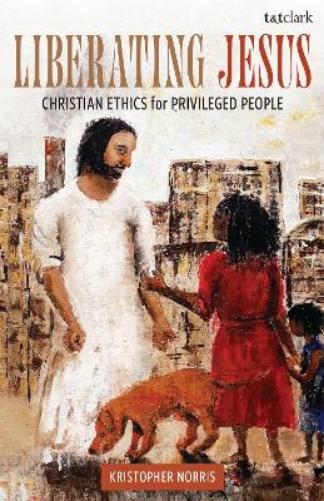
Liberating Jesus
Christian Ethics for Privileged People
Accessible and student-friendly introduction to Christian Ethics that draws upon interwoven threads of liberationist, womanist, Anabaptist, and postliberal theologies to offer a framework for a communitarian virtue ethic of liberation. Explores such topics as racial justice, gender and patriarchy, economics, war, and climate change.
A call to free Jesus from the colonial ethic of exploitation and oppression that has distorted much of Christian theology and ministry. Norris presents an ethical model that draws upon liberationist, womanist, Anabaptist, and postliberal theologies, and offers a framework for a communitarian virtue ethic of liberation. It identifies the commonalities between these threads, notably the importance of community, character, and justice—while acknowledging their distinctions—and directs them toward the target audience: Christians who embody and enjoy various levels of social, economic, and political privilege. In doing so, it calls on them to confront the oppressive legacy of Christian ethics and begin to understand ethics as formation into a life of service and advocacy, following the witness of Jesus, for the liberation of the marginalized. This book provides Christians with various levels of privilege a way to understand their role and responsibility in participating in movements for justice and liberation.
Original: $34.03
-65%$34.03
$11.91Product Information
Product Information
Shipping & Returns
Shipping & Returns
Description
Christian Ethics for Privileged People
Accessible and student-friendly introduction to Christian Ethics that draws upon interwoven threads of liberationist, womanist, Anabaptist, and postliberal theologies to offer a framework for a communitarian virtue ethic of liberation. Explores such topics as racial justice, gender and patriarchy, economics, war, and climate change.
A call to free Jesus from the colonial ethic of exploitation and oppression that has distorted much of Christian theology and ministry. Norris presents an ethical model that draws upon liberationist, womanist, Anabaptist, and postliberal theologies, and offers a framework for a communitarian virtue ethic of liberation. It identifies the commonalities between these threads, notably the importance of community, character, and justice—while acknowledging their distinctions—and directs them toward the target audience: Christians who embody and enjoy various levels of social, economic, and political privilege. In doing so, it calls on them to confront the oppressive legacy of Christian ethics and begin to understand ethics as formation into a life of service and advocacy, following the witness of Jesus, for the liberation of the marginalized. This book provides Christians with various levels of privilege a way to understand their role and responsibility in participating in movements for justice and liberation.