Being a Nation State in the Twenty-First Century
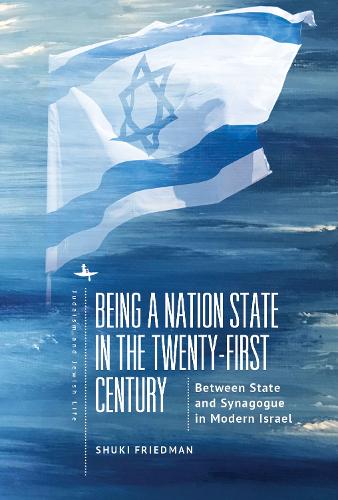
Between State and "Church" in Modern Israel Since the founding of the Zionist movement until today, the question of the relationship between “Church” and the state remains unresolved. This book is the historical and contemporary story of this conflict. It is impossible to understand the State of Israel properly without reading it. Since the founding of the Zionist movement until today, the question of the relationship between “church” and state in Israel remains unresolved, resulting in a continuous legal and social conflict among Israelis. The tension that arises from Judaism acting not only as a religion and culture but also as a national entity constitutionally underpinning an entire state—resulting in the “Jewish and democratic state” of Israel—manifests in major aspects of daily life for Israelis, such as marriage and divorce, conversion, and Shabbat. This book presents a crucial piece of scholarship in understanding the history and current dynamics of the relation between state and religion in Israel, and, in doing so, provides a unique perspective on the future potential solutions to this social rift.
Product Information
Product Information
Shipping & Returns
Shipping & Returns
Description
Between State and "Church" in Modern Israel Since the founding of the Zionist movement until today, the question of the relationship between “Church” and the state remains unresolved. This book is the historical and contemporary story of this conflict. It is impossible to understand the State of Israel properly without reading it. Since the founding of the Zionist movement until today, the question of the relationship between “church” and state in Israel remains unresolved, resulting in a continuous legal and social conflict among Israelis. The tension that arises from Judaism acting not only as a religion and culture but also as a national entity constitutionally underpinning an entire state—resulting in the “Jewish and democratic state” of Israel—manifests in major aspects of daily life for Israelis, such as marriage and divorce, conversion, and Shabbat. This book presents a crucial piece of scholarship in understanding the history and current dynamics of the relation between state and religion in Israel, and, in doing so, provides a unique perspective on the future potential solutions to this social rift.