Refugee Lives in the Archives
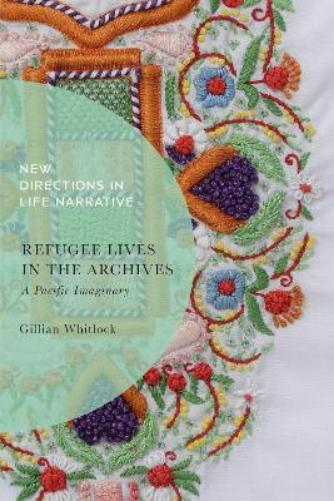
A Pacific Imaginary This book introduces the unique archive of letters, textiles, hand-drawn maps, emails and photographs from asylum seekers held indefinitely in offshore detention at Topside Camp, Nauru 2001-5. These artefacts introduce the distinctive and creative forms of resistance produced by asylum seekers in the remote Pacific camps on Nauru and Manus Island, and they expose their experiential histories of radical suffering and trauma. Paying due deference to the creative and aesthetic agency of these various documents and artefacts created by the undocumented here, Gillian Whitlock generates a cultural biography of the Nauru camp that humanizes those who have remained unseen and unheard, and features the activist campaigns and the political resistance that assert the agency of witnessing refugees. Structured around the collections of various artefacts exchanged between detainees and humanitarian activists, Refugee Lives in the Archives draws on emerging theories from detention centres and the asylum seekers themselves in a distinctive and expansive Pacific imaginary of refugee life narrative.
Drawing on the letters, photographs, drawings, maps and craftwork they exchanged with humanitiarian activists, this book explores the life narratives of asylum seekers in detention on Nauru, and how their lives in the camp are narrated in their own words
Building on Whitlock’s substantial body of work in testimonial, documentary and archive practices, this book focuses on the ‘testimony of things’ and probes an approach to archival studies that moves life writing in new directions, to respond collaboratively to the diverse materiality of story-telling and exchanges in the unique and creative forms of asylum seekers’ voices, stories and epistemologies.
Product Information
Product Information
Shipping & Returns
Shipping & Returns
Description
A Pacific Imaginary This book introduces the unique archive of letters, textiles, hand-drawn maps, emails and photographs from asylum seekers held indefinitely in offshore detention at Topside Camp, Nauru 2001-5. These artefacts introduce the distinctive and creative forms of resistance produced by asylum seekers in the remote Pacific camps on Nauru and Manus Island, and they expose their experiential histories of radical suffering and trauma. Paying due deference to the creative and aesthetic agency of these various documents and artefacts created by the undocumented here, Gillian Whitlock generates a cultural biography of the Nauru camp that humanizes those who have remained unseen and unheard, and features the activist campaigns and the political resistance that assert the agency of witnessing refugees. Structured around the collections of various artefacts exchanged between detainees and humanitarian activists, Refugee Lives in the Archives draws on emerging theories from detention centres and the asylum seekers themselves in a distinctive and expansive Pacific imaginary of refugee life narrative.
Drawing on the letters, photographs, drawings, maps and craftwork they exchanged with humanitiarian activists, this book explores the life narratives of asylum seekers in detention on Nauru, and how their lives in the camp are narrated in their own words
Building on Whitlock’s substantial body of work in testimonial, documentary and archive practices, this book focuses on the ‘testimony of things’ and probes an approach to archival studies that moves life writing in new directions, to respond collaboratively to the diverse materiality of story-telling and exchanges in the unique and creative forms of asylum seekers’ voices, stories and epistemologies.